

The Directorate of Revenue Intelligence (DRI) has dismantled a large-scale network involved in fraudulently importing South-East Asian areca nuts into India. The syndicate falsely declared the nuts as Bangladeshi origin to evade customs duty, leading to a potential revenue loss of over Rs 2,500 crore. Nine individuals have been arrested in connection with the scam.
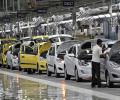
Buoyed by the success of signing the SAFTA agreement, India on Thursday committed to participate in free trade agreement with other nations in the region and asked the Indian auto industry to play a pivotal role and seize the global opportunity.

Prime Minister Narendra Modi addressed the Indonesian parliament, emphasising India's commitment to development over expansionism and advocating for a free, open, and inclusive Indo-Pacific. He highlighted the strong historical ties between India and Indonesia, calling for enhanced cooperation in various sectors, including defence, technology, and counter-terrorism, amidst growing concerns over regional security.

Prime Minister Narendra Modi and Indonesian President Prabowo Subianto have significantly advanced the India-Indonesia Comprehensive Strategic Partnership, securing crucial agreements on defence, critical minerals, and maritime security, including BrahMos missile supply and Sabang port development.
With the Saarc countries looking resolved to create a South Asian Free Trade Area by 2006, Indian tea industry, hit hard by depressed global prices, has never been closer to bagging the big Pakistani market.
In a phased and planned manner the countries will go for Free Trade Areas, a Customs Union, a Common Market, and a Common Economic and Monetary Union.

History may remember Takaichi Sanae not as the leader who simply accelerated Japanese rearmament, but as one who governed during Japan's transition from an industrial-age security model to a post-industrial strategic member of the global order, points out Varun Arya.

Among the current FTAs with significant trade deficits for India, five are with countries from the 10-nation Asean bloc. Exports to the 10 economies stood at $ 37.4 billion in 2018-19, up by 9% year on year. On the other hand, imports were higher at $ 59.31 billion, up by 25% from the previous year's $ 47.13 billion.
Voicing concern over Pakistan's non-implementation of South Asian Free Trade Area, the government said on Tuesday the effect of Islamabad's notification was limited to tariff concessions for India on items in the positive list.
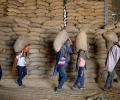
Domestic exporters on Monday expressed concerns over the crisis in Bangladesh and said the developments in the neighbouring country would have implications on bilateral trade. However, exporters expect that the situation may normalise soon. According to exporters, they are already facing disruptions in exports to Bangladesh due to a shortage of foreign exchange in that country.
India on Wednesday asked its South Asian neighbours to increase intra-regional trade as a cushion against slowdown in exports to the US and European markets.
A high-powered inter-ministerial committee was expected to finalise the list based on the suggestions and recommendations from different chambers, business houses and trade experts, the Daily Star newspaper reported.

The 'rescue' operation occurred within kilometres of Iran's underground tunnel complex at Isfahan, assessed by the IAEA and US intelligence as holding a substantial portion of the country's 60 per cent enriched uranium stockpile. Retired senior US military officers have highlighted that the mission's footprint -- hundreds of special operators, multiple heavy-lift aircraft deep inside Iran -- appears outsized for recovering a single airman. Prem Panicker continues his must read blog on the Iran War.
With the Indo-Pak dialogue in tatters and the respective armies exchanging fire across the Line of Control, an unexpected opportunity has presented itself for boosting trade between the two countries.
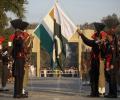
The talks for normalising trade had begun in November 2011.
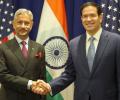
Rubio voiced "appreciation" for New Delhi's continued engagement on bilateral issues, including trade, defence and energy.
In a major effort to promote regional trade, India and six other South Asian countries have finalised the agreement on free trade area, which will come into effect from January 1.
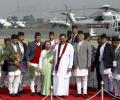
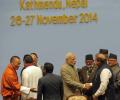
Prime Minister Narendra Modi and leaders of other South Asian Association for Regional Cooperation countries will meet in Kathmandu on Wednesday with an aim to revitalise the regional grouping and make it a major platform to fuel economic growth through liberalised trade and combat challenges of terrorism and climate change effectively.

Even as the bilateral relationship between the two neighbouring countries remains hostile, there is growing coordination between India and Pakistan on one multilateral forum - the World Trade Organization (WTO). Both countries have made two joint submissions at the WTO as co-sponsors in the past two months. In June, Pakistan joined India, Cuba, and 44 African countries, seeking sufficient flexibility in intellectual property rights for developing countries to fight the Covid-19 pandemic.
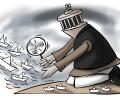
As India goes into firming up trade deals with developed nations like Australia, the United Kingdom (UK) and the regional bloc, and the European Union (EU), it will have to be well prepared to negotiate on new-generation issues, such as data protection regulation, e-commerce, and environment. India is yet to negotiate pacts with its trading partners on these evolving issues since discussions between them have until now been largely focused on tariff and non-tariff barriers and the rules of origin. "We can no longer look at trade just as trade. We have to look at it in totality of global and regional conditions.

Sushma Swaraj urged the SAARC nations to focus on culture, commerce and connectivity.

Prime Minister Narendra Modi arrived in Kathmandu on Tuesday to attend his first SAARC Summit, being hosted by the Government of Nepal.
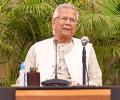
The chief adviser's decision to stay in office came two days after he told student-led National Citizen Party (NCP) leaders that he was mulling resignation as he felt "the situation is such that he cannot work", citing difficulties in working amid the failure of political parties to find common ground for change.

Sources said China was forcefully pushing for inking the deal during the RCEP summit later in the day, which was seen as an attempt to counter-balance the impact of its lingering trade war with the US as well as to project the region's economic might to the West.
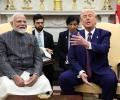
'Trump's aggressive stance towards China and preference for military posturing could shift the Quad's balance towards overt militarisation.'

Asked for China's comments on India not joining the RCEP deal over concern of cheap Chinese products potentially harming its domestic industry, Chinese foreign ministry spokesman Geng Shuang told the media in Beijing on Tuesday that China welcomes India joining the deal.

The US "Indo-Pacific Strategy" is bound to be a failed strategy, Wang said in the comments posted by the Chinese foreign ministry on its website.
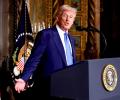
The US is currently Earth's most powerful country and a certain latitude of understanding -- a world view -- is popularly expected from its leadership. From a country identified with freedom, constitution, debate, democracy and the likes of Abraham Lincoln even as it had the most powerful military around, the US, following Trump's actions, seemed repositioned as militarily powerful with other qualities secondary, observes Shyam G Menon.

The only possible solution to the Kashmir issue between India and Pakistan is to create a situation where the "lines while in existence" become "irrelevant", Jammu and Kashmir Chief Minister Omar Abdullah said in an interview published on Sunday.

Modi attended the 20th ASEAN-India Summit in Jakarta. Secretary-General of ASEAN Dr Kao Kim Hourn also attended the summit.
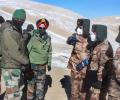
"China creeps towards hegemony in Asia, threatens India's borders, and treats other countries as junior partners, Indian-American Congressman Ro Khanna said.

Prime Minister Modi on Saturday left for Egypt after concluding his state visit during which he held wide-ranging talks with President Joe Biden and addressed the joint session of the US Congress.

Protectionist and exclusionary FTAs weaken multilateralism.
